Katie: Welcome to Pass the Blame. I’m your hostess, Katie Robles. With us today is the talk of the body, Pancreas. Thanks for granting us this interview, Pancreas.
Pancreas: Happy to be here. I want to set the record straight.
Katie: Pancreas, your body has been diagnosed with diabetes type 2 and many organs are laying the blame on you.
Pancreas: It’s not my fault and they know it.
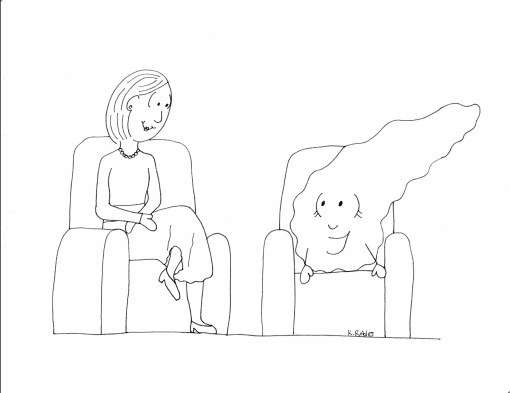 Katie: Isn’t diabetes—in its essence—a lack of insulin? And as the pancreas, isn’t it your job to make insulin?
Pancreas: I’ve been making insulin perfectly for decades, Katie. Decades! I’ve done my job.
Katie: You’re saying this problem is new? Everything was fine when your body was young?
Pancreas: Absolutely.
Katie: Don’t some children have diabetes? Couldn’t your body have been covering for you until now?
Pancreas: No, no, no. Juvenile diabetes is totally different: the pancreas in those cases can’t produce insulin. I can. I did. I do!
Katie: Calm down, please, Pancreas, we’re just trying to get the facts. Maybe it would help if you explain what it is that you do.
 Pancreas: You know what glucose is?
Katie: Glucose…as in sugar?
Pancreas: Yeah, close enough. When you eat, the carbohydrates are broken down into glucose.
Katie: Carbohydrates?
Pancreas: You know: bread, pasta, rice, potatoes—
Katie: French fries?
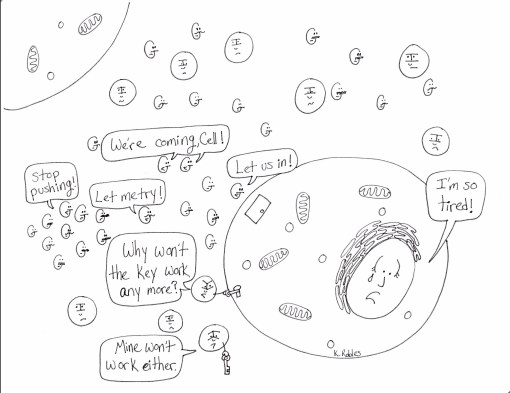
Pancreas: Yes, and lentils, beans, fruits, milk products, and the list goes on. They all break down into glucose which is fuel for your cells. No glucose, no energy. Blood delivers the glucose to every cell in the body, but cells are paranoid: they don’t let just anything in. You have to have the right key.
Katie: Let me guess: insulin is that key?
 Pancreas: That’s right. Without insulin, the cell doors stay locked tight and glucose stays in the blood.
Katie: And the cells have no energy?
Pancreas: Right.
Katie: And you say you still make insulin?
Pancreas: Yes, I do.
Katie: Then why is your body diabetic?
Pancreas: Body was pumping in extra glucose for years and I produced extra insulin to compensate. It worked for a while, but eventually my keys didn’t fit the locks anymore.
Katie: Why is that?
Pancreas: I don’t know, but it’s the locks that changed, not the keys. I didn’t have a word for it at the time, but Brain has been reading pamphlets and she says it was Insulin Resistance. I worked overtime making insulin and that helped a little.
Katie: Body had no idea something was wrong?
Pancreas: Not consciously, no. Skin says she made a dark circle on the back of body’s neck, but Eyes never saw it, so Body kept doing her thing. Over the years a bunch of Belly Fat moved in, Body stopped exercising, and my insulin keys only worked part of the time. That’s when the finger pointing started.
 Katie: What do you want our audience to know, Pancreas? Set the record straight for us.
Pancreas: I’m a hard working organ; always have been. My product is the key to glucose absorption in cells and if the key isn’t working, maybe they should blame the lock.
Katie: Pancreas, a few organs have noticed that because you produce so much insulin, body has been feeling hungry. Body eats more, more glucose circulates, and you make more insulin. I give no credence to the conspirators who claim you’re trying to wag the dog here, but why don’t you simply slow down insulin production?
Pancreas: Look, orders come in, I fill them. I’m not authorized to do anything else. But my production units are so overworked they’re starting to break down, so those conspirators might just get their wish.
Katie: Thank you, Pancreas. We’re going to take a short bathroom break because Bladder is full, but we’ll be back in a moment.
 How does Batman the Exerciser lower cancer risk? There are three theories:
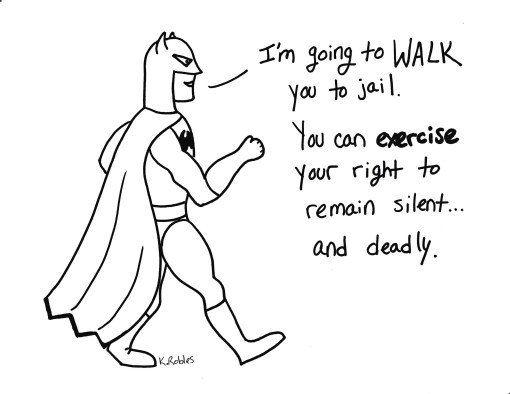 So what came first? The Fat or the out of whack Hormones? The sluggish colon or the sluggish human? We’ll leave that to the chickens and the eggs because we know the solution: Batman the Exerciser!
 Sex, Soup, and 2 Fisted Eating