 Halloween night after the kids are in bed, my husband and I have a naughty ritual: we claim our “Parent Tax” from the kids’ candy bags – preferred payment is in chocolate – and we gorge ourselves on candy bars we haven’t tasted since last Halloween. Candy is a rarity in our house for the simple reason that if we have it, I eat it and if we don’t, I don’t. To stay on track with my health and weight loss goals, I’ve created a Post Halloween Candy Survival Guide for my benefit and, hopefully, yours.
1. Donate extra candy to charity.
 Samaritan’s Purse runs Operation Christmas Child where volunteers pack shoe boxes with toys, hygiene items, clothes, and/or school supplies and give them away to poor children around the world, many of whom have never received a Christmas gift before. The collection week for this enterprise is, conveniently, the second week of November – ie. AFTER Halloween. If you don’t want your family to eat that entire bucket full of sweets, take the extra goodies to one of the drop off locations. They’ll be happy to portion the candy into little baggies to add to the shoe boxes. (Note: they do not accept chocolate; it tends to melt on the way to the Equator.)
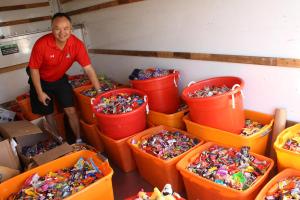 Another option is Halloween Candy Buy Back. Participating dentists buy candy back from kids for $1.00 a pound. The candy is donated to Soldier’s Angels and shipped overseas in care packages (complete with toothbrushes) to our troops overseas. Their website has a search feature to find a participating dentist near you.
2. Hide under the bed between meals. Or in a closet. For the month of November. Maybe December too.
3. Fill a bowl. Every time you run errands, fill one pocket with candy. Many offices have a bowl of candy on the front desk, but instead of taking a piece, leave a handful. Secret Agent 00Sweet!
4. Give a handful to the child of the unfriendly mom who made a snide comment about your bathrobe at the bus stop. Then repent, forgive, and…oh, come on, people, it’s a joke, lighten up! It would be funny, though….
 5. Make yourself a rule and stick to it. For example, you can eat a snack sized Twix only after you’ve done ten push-ups and thirty sit-ups and jogged up and down the stairs twice. Whatever balances you out calorie-wise so that your net intake is zero.
6. Human Piñata. Fill all of your pockets with candy and go to a play date with your children, grandchildren, nieces/nephews. Be the first ones to leave and as you walk past the children on the way to the door, “spill” the candy. If you want to make a little show of it, put headphones in your ears and groove to the music; the extra shaking makes it more believable when Starbursts and Milk Duds leap from your jacket pocket. Just be careful not to leave the room until you’re positive that your pockets are empty; you don’t want any unsupervised children following you home.
7.  Freeze it/Hide it. Chocolate keeps for a nice long time in the freezer and if you hide it in the back or in a freezer in the garage, you’ll probably forget it’s there. When you do remember, the frozen solid nature of the treat slows down how many you can consume before you come to your senses. For non-chocolate candy, hide it somewhere you don’t go often, like with the dusting supplies or filed with the income tax papers. When a birthday rolls around and it’s your turn to fill a piñata or party favor bags, pull out your hidden stash and you’re ready to go!
“For the Lord takes delight in his people;
he crowns the humble with victory.
Let his faithful people rejoice in this honor
and sing for joy on their beds.”
Psalm 149:4-5 NIV
Images courtesy of: Real Nutrition NYC (bowl), http://www.halloweencandybuyback.com/search-results.html (truck full of candy), https://www.samaritanspurse.org/what-we-do/operation-christmas-child/ (shoe boxes) Reading Confetti (Spiderman piñata)
 Edible pumpkin
 When you sleep seven to eight hours at night, your body has the time and rest it needs to mentally process your day, repair cellular damage, hunt down and remove toxins, and wake up with energy for a new day. When you’re deprived of sleep—even short a few hours a night—your body can only partially recoup. You’re left feeling run down because you are run down and we tend to try to fix ourselves with sweets, junk food, or caffeine for an energy boost.
 Eating: Studies have shown that sleeping less than 7 hours per night makes you crave high calorie foods, buy more food, and take larger portions than a rested person. Lack of sleep increases cortisol, the stress-related hormone, that ends up making you feel hungry all the time, even when your stomach is full. Fatigue affects your brain, activating the pleasure seeking cerebral section (donut, anyone?) and slowing down the good decision making (inhibition) center making your donut desire seem like a good idea. And if one donut is a good idea, two must be a really good idea!
 Moving: Regular sleep helps you burn more calories even when you’re not moving. Sleep is when your body builds and repairs muscle making any exercise you do more effective. Sleep helps your body regulate hormones like insulin and gives them time to do their job. The result is that sleepers burn more fat than non sleepers, even if their calorie intake is the same.
 Sometimes it’s hard to get started.
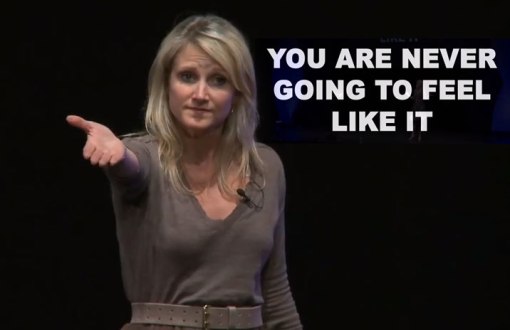 If that’s you today, take a few minutes to watch this TED talk by Mel Robbins. She discusses the secret to overcoming our own inertia. (Be advised: this video includes minor swearing. I first watched this video months ago and I still hear Mel’s voice in my head encouraging me, so I decided it’s absolutely worth sharing.)
 Right or left? Chicken or fish? Stairs or elevator? Sneak a piece of chocolate now when your kids might catch you and you’ll have to share or later when they’re asleep but you’ll probably end up eating the whole bag?
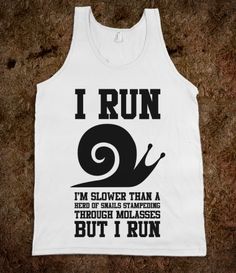
 The scientists put the snails into uncomfortably shallow water, “forcing” the shell-haulers to walk around the tank looking for deeper digs. Then they put the snails on dry land to see how long it takes them to make a decision (right or left? stairs or elevator?) and act on it. Apparently, snails who have been walking for a couple hours decide faster than snails who’ve been been soaking in deep water for hours. Why study Speedy Gon-mullusks? Their nervous systems are simple and straightforward so scientists can draw conclusions quickly.
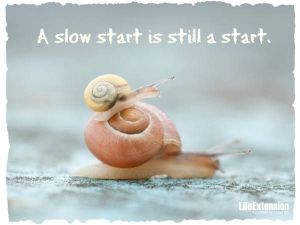 The thought of snails with sweatbands and Spandex shell coverings is funny, but do you have a better reason than that for bringing this up, Katie? Barely. I mean, yes! And here it is: if exercise can improve the mental capacity of a snail, then imagine what it can do for us! Exercise-even walking at a snail’s pace-not only strengthens bones and muscles, helps fight heart disease and a host of other medical woes, improves sleep, and boosts energy, it also increases blood flow to the brain which helps the brain work better and-as the snails will testify-faster. Some of us feel like snails when we exercise, but this escargot study is showing that it’s not the speed that counts, it’s the fact that you’re moving. If you don’t want to exercise for your body, do it for your neurons.
 I learned about this snail study on a radio show called The Strong Road (think Car Talk but about the Bible). I was a guest on the show on Sunday September 18th (you’ll need to know this when you look up my interview in their archives). The snail story was part of their (tongue in cheek) Biggest News Story of the Week. You can listen to the show anytime on the



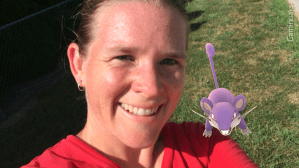 Pokemon Go is genius. Let me give you an example.
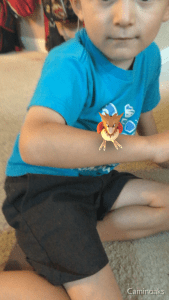 Genius Point 2: Building community.
 Sex, Soup, and 2 Fisted Eating